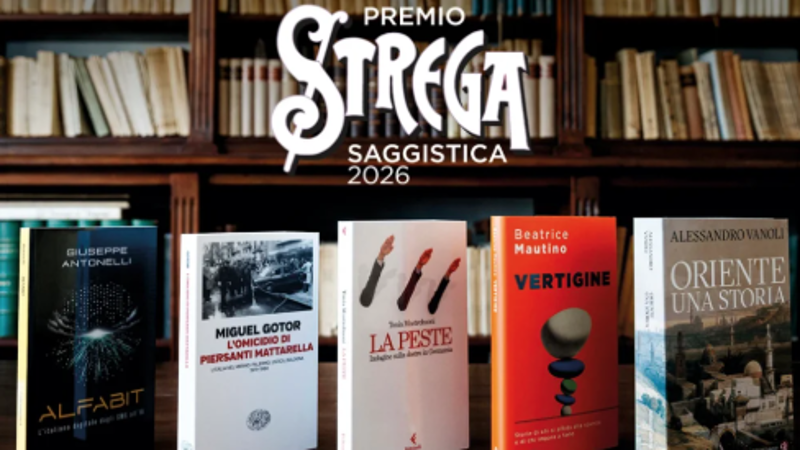
The Strega Non-Fiction Prize – organised by the Maria and Goffredo Bellonci Foundation, Strega Alberti Benevento and Taobuk – Taormina International Book Festival, in partnership with BPER Banca, in collaboration with Fuis (Italian Writers’ Federation) and Gabinetto Vieusseux, with Rai (state broadcaster) as media partner, and Feltrinelli Librerie and SYGLA as technical sponsors – has announced the shortlist of five for its second edition.
The Scientific Committee – comprising Carlo Felice Casula, Alfonso Celotto, Antonella Ferrara, Simonetta Fiori, Anna Foa, Paolo Giordano, Francesca Mannocchi, Melania G. Mazzucco, Matteo Motolese, Nico Pitrelli, Lucrezia Reichlin, Nino Rizzo Nervo and Giovanni Solimine (chair) – has selected the following titles:
Giuseppe Antonelli, Alfabit. Digital Italian from SMS to AI, il Mulino.
Miguel Gotor, The Murder of Piersanti Mattarella. Italy in the Crosshairs: Palermo, Ustica, Bologna. 1979–1980, Einaudi.
Tonia Mastrobuoni, La peste. Indagine sulla destra in Germania, Feltrinelli.
Beatrice Mautino, Vertigo. Storie di chi si affida alla scienza e di chi impara a farlo, Mondadori.
Alessandro Vanoli, Oriente. Una storia, Laterza.
Tonia Mastrobuoni, La peste. Indagine sulla destra in Germania, Feltrinelli.
“We are presenting five essays – rigorous yet accessible – to the voters’ judgement and the attention of the reading public. These works tackle issues at the heart of public debate, covering key moments in Italian and European history and current affairs, relations between East and West, and individuals’ relationship with science and new technologies,” said Giovanni Solimine. “For 2026, we have decided to award a special prize to Luciano Floridi, author, amongst other works, of the essays *The Fundamental Difference: Artificial Agency – A New Philosophy of Artificial Intelligence* (translated by Massimo Durante, Mondadori 2025) and *The Ethical Crux: Information and Values in the Digital Society’ (also edited by Massimo Durante, Raffaello Cortina Editore 2026), which present his recent studies on AI and the ethics of information in Italian. In these, as in his earlier works, the philosopher offers a contribution of exceptional significance to anyone who truly wishes to understand and use new digital technologies with clarity. His works mark a turning point in philosophical reflection on a field that represents a decisive challenge for the future of knowledge.”
Beatrice Mautino, Vertigine. Storie di chi si affida alla scienza e di chi impara a farlo, Mondadori.
‘The second edition of the Strega Non-Fiction Prize consolidates a journey that, from the very beginning, has found its raison d’être in the need to promote the role of critical thinking within contemporary cultural debate. In an era marked by profound transformations and increasingly complex challenges, non-fiction remains a privileged space for analysis, interpretation and debate, capable of offering indispensable tools for understanding reality and navigating change,” Antonella Ferrara said. ‘The collaboration with the Bellonci Foundation stems from a shared vision: to promote the most authoritative voices in contemporary thought and to foster the circulation of ideas as a driving force for civic and cultural growth. In this sense, the dialogue with the theme of Taobuk 2026, ‘Trust’, appears particularly fruitful: not as adherence to an established certainty, but as an exercise in intellectual responsibility, openness to listening and a rigorous search for interpretative tools capable of guiding our gaze upon the present. From this perspective, the presence of the Prize within Taobuk renews a shared understanding rooted in the conviction that culture represents one of the privileged spheres in which trust can be built, shared and passed on.”
Giuseppe Antonelli, Alfabit. L'italiano digitale dagli SMS all'IA, il Mulino.
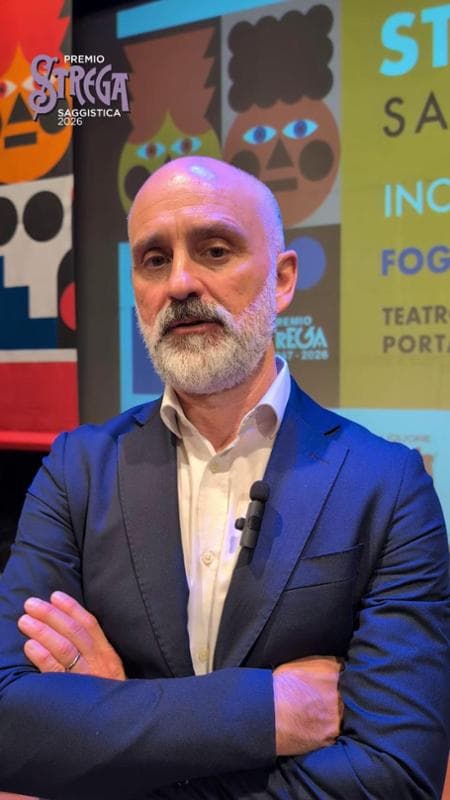
Eva Giovannini, moderator of the meeting with the five shortlisted authors, read out a message from Giuseppe D’Avino, who was unable to attend the event: “I would like to thank Antonella Ferrara for once again hosting the Strega Non-Fiction Prize as part of the prestigious Taobuk festival this year. Thanks are also due to the Scientific Committee for their careful selection of the nominated works, to the Maria and Goffredo Bellonci Foundation for the constant commitment it devotes to all sections of the Strega Prize, and to the authors and publishers who participate in this competition with such enthusiasm and quality.”
Miguel Gotor, L'omicidio di Piersanti Mattarella. L'Italia nel mirino: Palermo, Ustica, Bologna. 1979-1980, Einaudi.
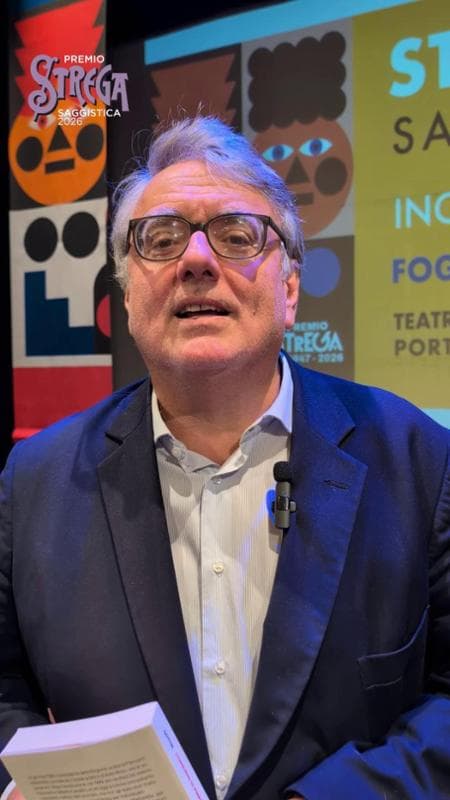
It will be up to the votes of the individual members of the jury – over fifty leading figures from academia, scientific research and investigative and cultural journalism, including the members of the Scientific Committee – to determine, from among the nominated works, which best represents the highest quality in contemporary non-fiction.
The awards will be presented on Wednesday 18 November atthe Teatro Palladium in Rome.
Alessandro Vanoli, Oriente. Una storia, Laterza.