
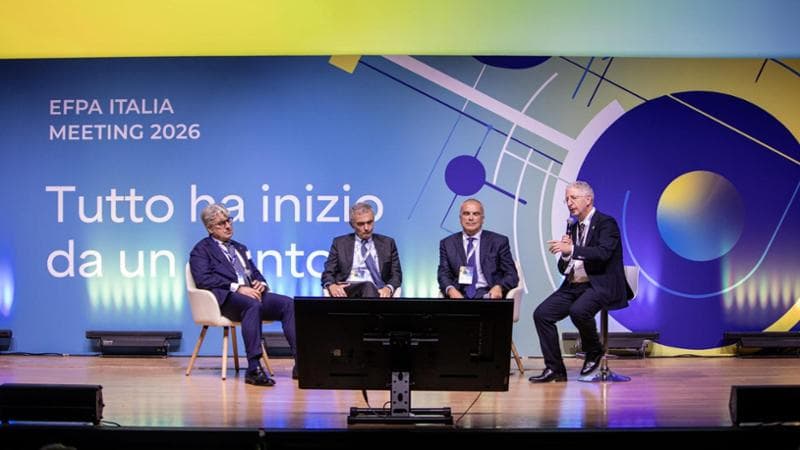
Making savings last longer, supplementing one’s pension, and preparing for care costs. For investors, increased life expectancy shifts priorities and means that advice focused solely on product selection is no longer sufficient. For those providing such advice, it means demonstrating the value of the service and justifying its cost. This is the thread linking the two key themes at the heart of the final day of the EFPA Italia Meeting in Florence: longevity and the evolution of the profession, grappling with the new European rules on the protection of retail investors.
The EU is pushing for greater transparency in investments
Emanuele Maria Carluccio, president of EFPA Europe, has identified July 2029 as the deadline for the implementation of the Retail Investment Strategy reforms, the European package dedicated to retail investments. At the heart of this is the principle of ‘value for money’: ensuring that the costs of products are justified by the benefits offered to savers. In this context, according to Carluccio, professionals will need to ‘establish an advisory service that is justified by fee-based remuneration and, above all, by clearly demonstrating the value it provides’. The direction indicated is towards explicit remuneration for advice, which, however, requires making it clear what the client receives: practical help in planning their wealth and addressing their needs. This transition also calls for broader skills: Carluccio has announced an annual programme that will enable holders of the EFA (European Financial Advisor) certification to obtain the EFP (European Financial Planner) certification.
Opportunities and risks associated with longer life expectancy
The most tangible evidence comes precisely from ageing. Planning for a longer life also means anticipating care needs that gradually increase, even before any loss of self-sufficiency. Giorgio De Rita, Secretary-General of Censis (research institute), explained this through an everyday limitation: “An elderly person does not use the escalator because it frightens them. It is not a serious loss of self-sufficiency, but it is a minor limitation.” These needs can translate into new expenses and require the coordination of savings, pension income and protection. According to Giuseppe Milanese, president of Osa (Operatori sanitari associati), “we need to structure a system focused on care rather than treatment”, bringing doctors and nurses into people’s homes and supplementing public welfare with long-term care provision. This is an issue that also affects young people: as Nicola Ardente, a director at Efpa Italia, pointed out, starting to invest early becomes all the more necessary as public resources struggle to sustain social spending.