Olive oil in the shadow of the Colosseum: Rome's unexpected harvest
Francesca Alliata Bronner
From olive groves among ancient Roman ruins to the historic mills of Sabina, discover Lazio's olive oil traditions, tastings and autumn harvests
4 min read
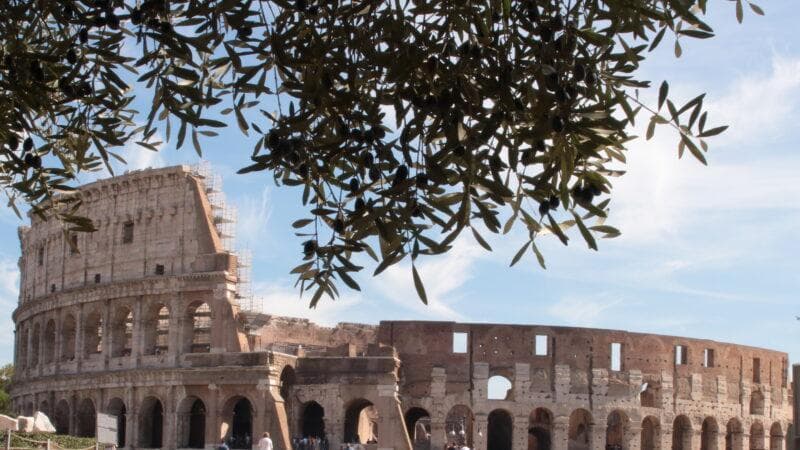
ROMA – All roads lead to Rome. But this time, the journey begins in the heart of the Eternal City and leads out into the olive groves of Lazio. And the starting point is a surprising one: the Colosseum.
Best known for its ancient ruins, the Colosseum Archaeological Park also encompasses the Roman Forum and Palatine Hill, with more than 40 hectares of green space in the heart of Rome. Here, visitors can explore trails dedicated to olive oil, wine and even honey. It is the first stop on a journey through the region’s olive oil traditions, from the capital to the historic mills of Sabina.
Olive oil, wine and honey in the shadow of the Colosseum
The park is home to 189 olive trees of different ages, growing along the Via Sacra, on the slopes of the Palatine Hill and near the Arch of Titus. Among them, the younger Leccino trees produce an olive oil called Palatinum, intended primarily for cultural and institutional use rather than commercial sale.
“Looking after the olive trees and producing Palatinum are central to our partnership with Coldiretti Lazio,” explains Simone Quilici, director of the Colosseum Archaeological Park. “OP Latium and Unaprol are also involved in managing the agricultural activities. The project allows us to put the olives to good use while preserving and celebrating a botanical heritage that is an integral part of the site's history.”
From olive oil to wine is only a short step – at least within the park. In recent years, the Barberini vineyard on the Palatine Hill has been brought back to life. Its ancient indigenous grape variety, known to Pliny the Elder as uva pantastica, is the source of Bellone, a wine produced under the Parco Green project in the shadow of the Colosseum.
Since 2022, this “noble vineyard” has been part of Iter Vitis, one of the Council of Europe's Cultural Routes, an initiative designed to promote and safeguard Europe's tangible and intangible wine-growing heritage.
Just a short walk away, along a path winding through the hill's Mediterranean vegetation, visitors will find the beehives that produce Ambrosia del Palatino, honey made by Rome's own bees.
Rome's urban olive groves
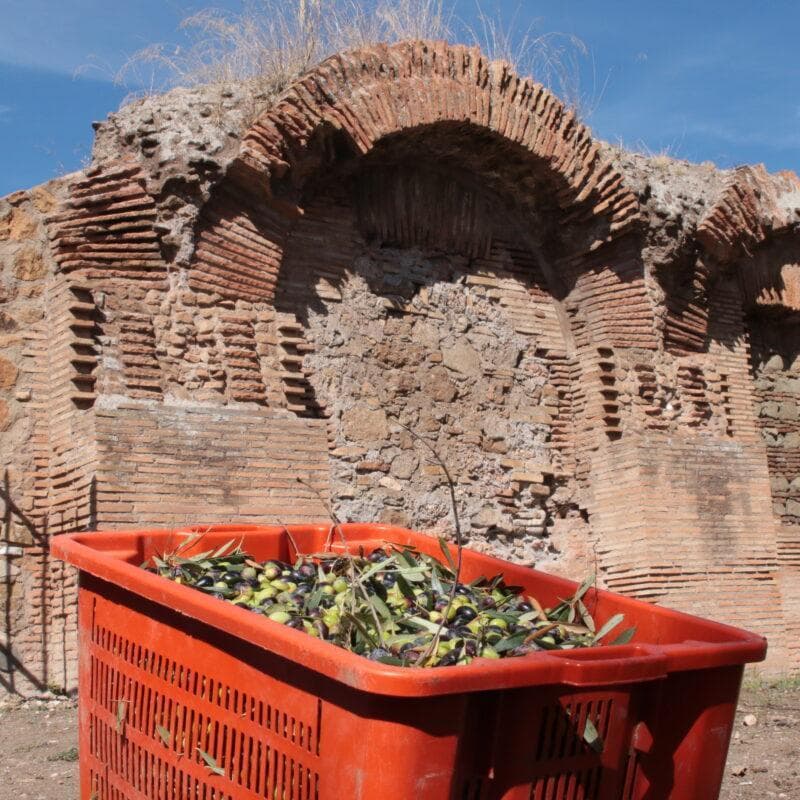
The olive harvest in the shadow of ancient Roman ruins
Beyond the historic centre, Rome's own olive trees – the ulivi de' noantri, as locals might call them – offer further opportunities to explore the city's olive oil heritage.
One such trail runs through Parco dei Romanisti, in the Torrespaccata neighbourhood, where the city authorities have been giving a new lease of life to olive trees removed from Viale Mazzini, in the Prati district, as well as those growing at Villa Glori.
In May 2025, 13 olive trees were planted in the green space along Via dei Romanisti, joining the 35 already there. The transplanted trees had originally formed part of the tree-lined landscape of Viale Mazzini, which has since been redeveloped in keeping with the original design by Raffaele De Vico – a plan that did not include olive trees.
The trees have found a new home in a public space where local residents play an active role. In the park, the Gaspar8 association runs an olive-harvesting and oil-production project, with the aim of donating the resulting oil to families in need.
The park's collection of trees continues to grow: in early 2026, the association planted a further 17 olive trees.
“The aim of the project – carried out entirely by local residents on a voluntary, unpaid basis – is both environmental and social,” explains Sabrina Alfonsi, Rome's councillor for agriculture, the environment and waste management.
The city's historic villas also offer opportunities to discover olive oil trails that combine environmental regeneration, landscape restoration and agricultural heritage. At Villa Glori, a project is under way to restore the park's 400 olive trees.
Another highlight is Rome's own municipal olive oil, produced at the Castel di Guido agricultural estate, just a few kilometres from the capital. The oil has been awarded Protected Geographical Indication (PGI) status, an EU quality label granted to products whose characteristics are linked to their place of origin. The November olive harvest is now under way, and everyone is welcome to take part.
November, the season of freshly pressed olive oil
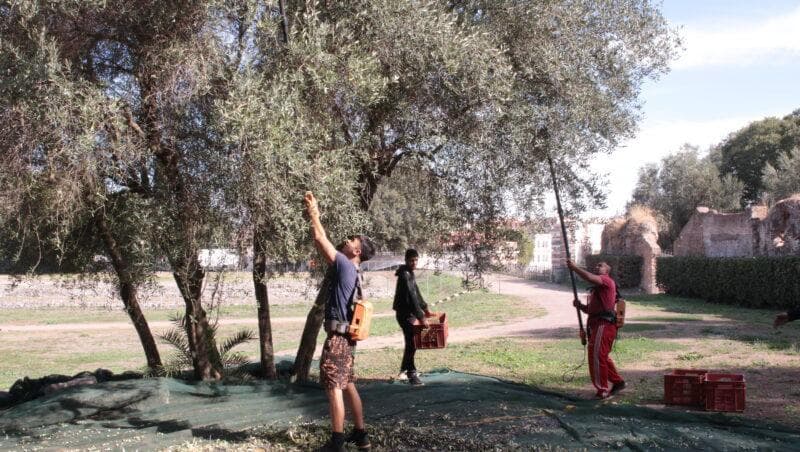
Olive harvesting in the heart of Rome
November is the perfect month to discover Italy's olive oil culture at first hand. Olive mills are in full swing, opening their doors for tours and tastings. Freshly harvested olives are pressed into oil, then drizzled over slices of warm bread, releasing fresh, grassy aromas and distinctive bitter and peppery notes.
Lazio's olive oil industry is enjoying growing success, with production figures and recognition on the rise. Extra virgin olive oil (EVO) is far more than an agricultural product: it is an expression of local identity and an important part of the region's cultural heritage.
Across the Agro Pontino, Sabina, Tuscia and the Castelli Romani, numerous initiatives invite visitors to discover the different stages of production, explore olive groves and take part in guided tastings.
Among the most interesting destinations is Sonnino, in the province of Latina. At this time of year, visitors can explore the Cetrone family estate and olive mill, where generations of the same family have cultivated and preserved the Itrana olive variety since 1860. Today, Itrana is considered one of the world's finest olive cultivars.
In Canneto Sabino, a hamlet of Fara in Sabina, in the province of Rieti, the 29th Festa dell'Olio Nuovo (New Olive Oil Festival) takes place on 7 and 8 November, under the theme Andar per olio e per cultura (Exploring Olive Oil and Culture).
The programme includes guided visits to Canneto's thousand-year-old olive tree and local mills, tasting courses dedicated to freshly pressed extra virgin olive oil, markets selling local produce, music and cultural tours.
Another initiative, Porta il tuo olio (Bring Your Own Oil), gives visitors the opportunity to have the acidity of their own olive oil tested free of charge and learn more about its characteristics.
In Tuscia, the arrival of the new season's olive oil is celebrated in Vignanello, in the province of Viterbo, with the 26th Festa dell'Olio e del Vino Novello (New Olive Oil and Wine Festival), running from 13 to 15 November.
Tastings, food trails and events exploring the world of extra virgin olive oil are combined with opportunities to discover the town's historic heritage, from Castello Ruspoli and its gardens to its ancient underground passages.
Two workshops are also scheduled for 8 and 15 November, both focusing on the role of high-quality extra virgin olive oil in the Mediterranean diet.
An olive oil experience in the Castelli Romani
For anyone wishing to explore the world of extra virgin olive oil throughout the autumn, Villa Cavalletti in Grottaferrata, in the Castelli Romani hills, offers an experience combining history, landscape and flavour.
At this organic agricultural estate, the Olio et Amo experience includes a tour of the grounds and the Olive Oil Museum, an aroma workshop and a visit to the historic olive mill, where visitors can learn about traditional production methods.
The visit ends with a guided tasting of three olive oils, including a blind tasting designed to help participants identify a defective oil, followed by a final tasting served with bread made from organic flour produced on the estate.