
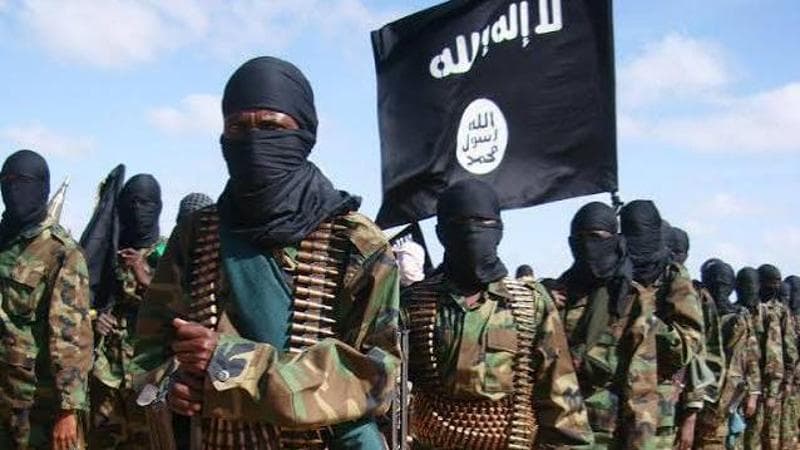
ROME – In October, according to Acled, the conflict monitoring organisation which disseminates real-time data and analysis on ongoing wars, the Islamic State in Mozambique (ISM) made its presence felt in nine districts of Cabo Delgado province. After collecting a ransom of $53,000 for a kidnapping in Montepuez, the ISM fighters returned to their stronghold in Macomia without being disturbed by the state armed forces. Despite the deployment of around 100 troops in Montepuez, the ISM still managed to carry out the operation during the second half of the month, including in the districts of Mueda and Muidumbe, targeting rural communities during the last 10 days of October.
Where jihadism wins easily. The armed Islamists’ easy victory has much to do with the total social marginalisation felt by the population and the credible absence of state institutions. The region where the conflict is taking place has therefore suffered (and continues to suffer) for decades from the central government’s disheartening administrative neglect; from a chronic lack of services; from endemic poverty; and from ethnic and social divisions. These are all ideal conditions for jihadist groups to effortlessly penetrate the social fabric and recruit young people.
Such wealth amidst immense poverty. Cabo Delgado is the ‘blood-red corner’ in northern Mozambique. The war in that region began in October 2017 and has so far claimed over 6,600 lives and displaced more than 1.3 million people in the north of the country. The conflict stems from the presence of jihadist armed groups, which—particularly in Africa—spring up where there is extreme poverty among the population and, above all, where there is the eternal “curse of resources”. Cabo Delgado is one of the poorest areas in Mozambique, yet it is also incredibly rich in liquefied natural gas deposits (in the Afungi area), as well as ruby, graphite and coal mines.
Widespread and deep-seated anger. Riches from which the local population has never derived even the slightest economic benefit, despite the massive international investment by the extractive industries. All this could only have led to tensions that have matured into widespread and deep-seated anger, which ultimately erupted through the weapons of jihadism, as is often the case, especially when Islamists become useful tools for protecting the plundering of resources by foreign forces or for facilitating the territorial expansionist ambitions of neighbouring countries.
Eighty per cent of displaced people are women and children. The impact of the war on the education system must also be assessed: the uncertainty and the fear that many have of seeing their children die in a jihadist attack have disrupted the running of schools, to the extent that today millions of children are being denied an education and, consequently, their fundamental opportunity for growth.
Tens of thousands of people have been reduced to the status of refugees due to the floods. Mozambique has faced devastating floods in its central and southern provinces, which have affected hundreds of thousands of people, destroyed thousands of kilometres of roads, disrupted supply chains and left tens of thousands of people displaced, with no option but to seek refuge in temporary shelters.
The response from humanitarian organisations. Almost unanimously, the UNHCR, UNICEF and many international NGOs, when asked, reply that the central issue lies in the severe shortage of funds needed to operate effectively in the face of crises such as the one in Mozambique. First and foremost, they said, there was the difficulty of accessing isolated areas and the impassability of transport routes, which had been damaged by climate-related disasters.
Other humanitarian organisations operating in Mozambique include:
Italian Cooperation. It develops projects through funding and the active participation of Aics (the Italian Cooperation Agency)
READ THE REPORT BY MONDO SOLIDALE FROM MOZAMBIQUE
primarily in the field of healthcare services and prevention in the fight against cancer, including cervical cancer, as well as health initiatives in the provinces of Manica and Sofala.
* –There is also support for farming families and small-scale producers, focusing on the management of natural resources and the improvement of farmers’ living conditions.
* – The Regenera project in Ciamanculo (Maputo) was set up to carry out urban regeneration of roads, drainage systems, street lighting, public spaces and land title regularisation.
* – Great emphasis is also placed on the environment, with the “Sustainable and Integrated Development of Marine and Coastal Resources” programme, recently launched and funded to protect biodiversity in forests and fragile marine ecosystems. These are just a few examples.
The work of aid workers on projects run by numerous NGOs:
* – Medici con l’Africa Cuamm. It has been present in the African country for over 70 years, working in the health sector and providing medical care and support to local hospitals.
* – AVSI Foundation. Active since 2010 with numerous projects in areas such as Maputo, Cabo Delgado, Sofala and Chimoio. It works in fields such as child protection, agriculture, energy, women’s empowerment and urban development.
* – WeWorld. It has been working in Mozambique since 2000, promoting sustainable development, vocational training and humanitarian aid.
* – LVIA: In collaboration with Caritas Italiana, it develops projects relating to waste management, recycling and environmental and social improvement, such as at the Maputo landfill site.