
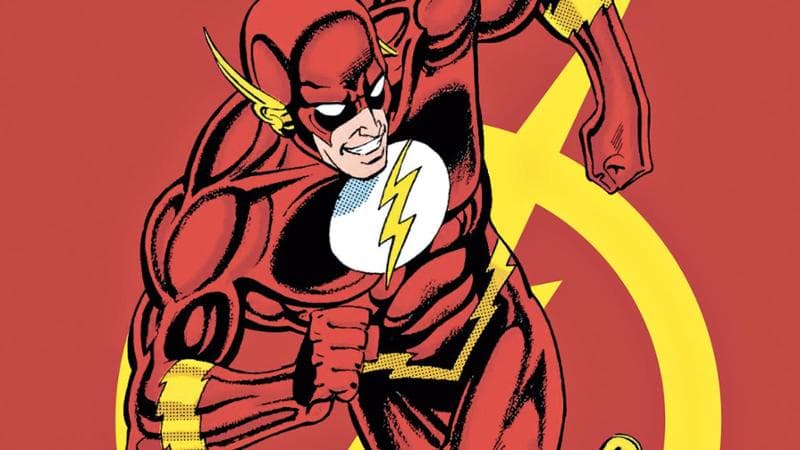
If, as Frank Miller says, superhero comics are modern American mythology, Mark Waid is the anti-Miller: a lucid, devoted and yet rebellious theologian. Raised in Alabama, devouring comic books as a refuge from a nomadic and solitary childhood, Waid worked his way up through the industry from the bottom: an encyclopaedic archivist in fanzines, a volunteer at the first conventions, then an enlightened editor and finally an absolute master of scriptwriting. His name is linked to a purest vision of the canon, capable of regenerating myths without ever betraying their moral core. With his decade-long run on *The Flash* in the 1990s, he revolutionised the concept of legacy in comics, inventing fundamental concepts such as the ‘Force of Speed’ over a ten-year run; and then, with Alex Ross’s sculptural illustrations, he created *Kingdom Come* in 1996 – a monumental masterpiece that dared to challenge the cynical, gloomy and hyper-violent aesthetics of the era to reaffirm the ethics, light and nobility of the classic hero as a bulwark against the chaos of the world, often infusing it with a great deal of irony.
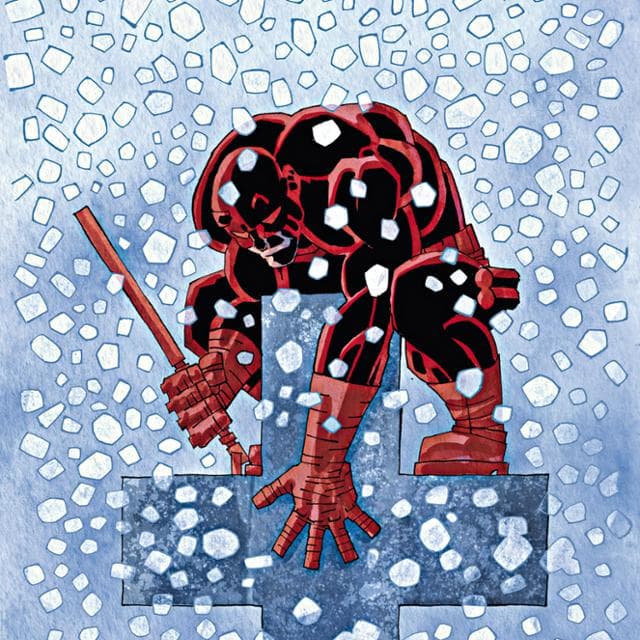
Not only that: he has also created some of the most memorable sagas for rival Marvel: from the relaunch of Captain America to the warm, family-oriented take on the Fantastic Four with the late Mike Wieringo, right through to a historic, multi-award-winning Daredevil run in which he dared to heal Matt Murdock’s wounds and depression with the courage that comes from a smile. Today, he has returned to DC Comics as the creator and architect of seminal series such as Batman/Superman: World’s Finest and Justice League Unlimited, which are bringing comics back into the spotlight for new generations and beyond: Even more mature readers who are not content with mere nostalgia but crave something more complex finally have the chance to revisit the characters they grew up with, discovering previously unseen facets of them.
From Alabama, where you grew up, to comics: how did your passion begin?
‘As a child, I was very bright and started reading early, but I didn’t have any close friends: I was always smaller than my classmates. What’s more, we were constantly moving house; I changed schools twelve times in ten years. At the age of four, I discovered Batman and the DC heroes: they became a constant in my life, imaginary but steadfast friends. That love has never left me.’
He started out in fanzines and as a continuity archivist before writing for DC. When did he realise this would become his career?
‘It was a gradual process. I worked in the fan press, compiled chronological indexes, interviewed authors and volunteered at conventions. I wanted to be an editor, not a writer: the idea of churning out storylines non-stop terrified me. In 1987, DC offered me an editorial role. Reading scripts by the best talents was a training ground: in two years I learnt more than I had in ten on my own. After leaving the editorial team, they entrusted me with my first short stories. I realised I had the right aptitude, and things have worked out for forty years.”
Among the legends you’ve crossed paths with is Stan Lee. Did you ever get to know him on a personal level?
‘At BOOM! Studios, I was in charge of editing a series for which Stan had provided the name and story ideas. An issue came back ready for the printers; I went to his office to go through it on the sofa. Stan leafed through it and gave me the cold shoulder: “I can’t put my name on this rubbish.” There were 48 hours to go before printing: I locked myself in my office, took the panels apart, rewrote various passages and went back to him the next day. Once he’d finished reading it through, he gave me a pat on the knee: ‘That’s the best editing job I’ve ever seen.’ An immense compliment. From then on, we talked for over an hour as friends, and he told me previously untold anecdotes about Ditko, Kirby and the early days of Marvel. He showed me the real Stan, without any pretence.’
The first real turning point in his career was The Flash.
‘The Flash had been a historic mainstay of DC for over fifty years, but the TV series starring John Wesley Shipp had been cancelled after just one series and sales of the comic were flagging. The executives wanted to shut down the title, but the editor, Brian Augustyn, insisted on making one last attempt and entrusted it to me. At DC, nobody wanted to give it to me: the bosses thought that a mere fanboy would do nothing but rehash the stories from his childhood. Instead, Brian and I were perfectly in tune and created something special: that run lasted almost ten years, became the true foundation of my career, and I’ll be eternally grateful to him.”
And just as *Flash* was taking off, the masterpiece arrived: *Kingdom Come*.
“Alex Ross, fresh from the success of *Marvels*, came to DC with sketches and ideas: he was determined to create a grand epic about the classic heroes, and they were looking for someone who knew that universe inside out to work alongside him. I can’t tell you the name of my senator or where my car keys are, but I know every detail about Superman, Batman and Wonder Woman. Alex and I hit it off straight away when we talked about characters everyone had forgotten. In DC stories, you’re up against absolute deities; the stakes have to be cosmic. I knew that with his painted panels, something unique would emerge: I always say that if anyone else had drawn it, nobody would remember it today. Yet, thirty years on, people still talk about it fondly. Nothing moves me more than when, at festivals, readers show me well-thumbed copies and apologise for the condition of the book: I always reply that if a book is falling apart, it means it has truly been loved.”
In a sense, with *Kingdom Come*, your masterpiece, you were an ‘anti-Frank Miller’.
‘It was a clear reaction to the direction Image Comics was taking in the mid-1990s: a race to the bottom to see who could draw the most machine guns, disproportionate breasts and crude violence. For Alex and me, superheroes embody moral nobility: they do good because it’s the right thing to do. We wanted to reaffirm that strength lies in ethical integrity, not in hyperviolence.’
Do you see any parallels with the contemporary political landscape?
‘Absolutely. Every time I sit down at the keyboard, I feel the responsibility to write anti-fascist stories that stand up for ordinary people. In my country, the shadow of authoritarianism is oppressive: but finally, seeing the results of the mid-term elections, it seems people have realised this: the risk, if we do not repel this threat, is that we will become a fascist nation. Telling the stories of heroes who reject oppression today is a civic duty.”
Does your Captain America have a political streak too?
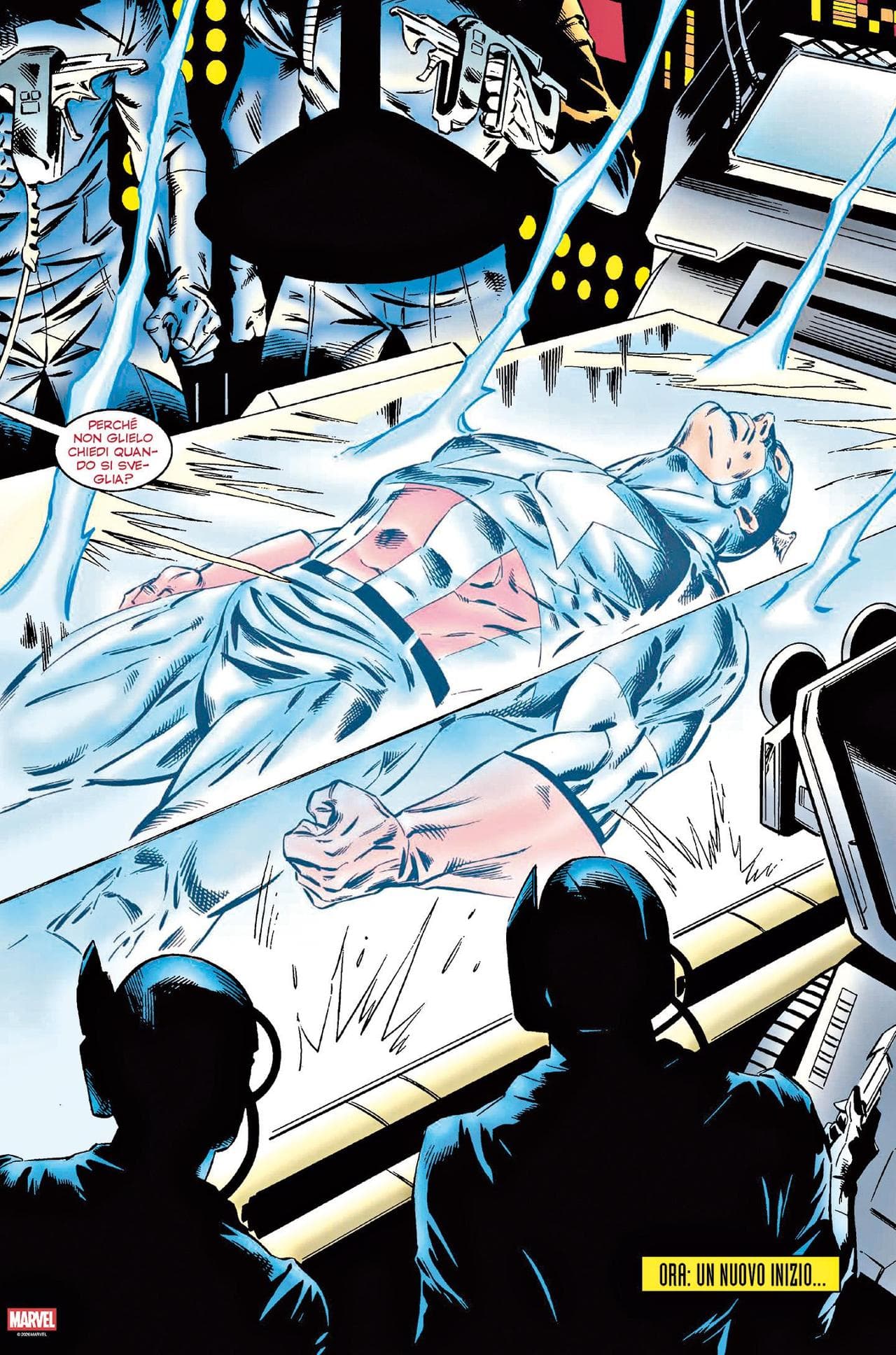
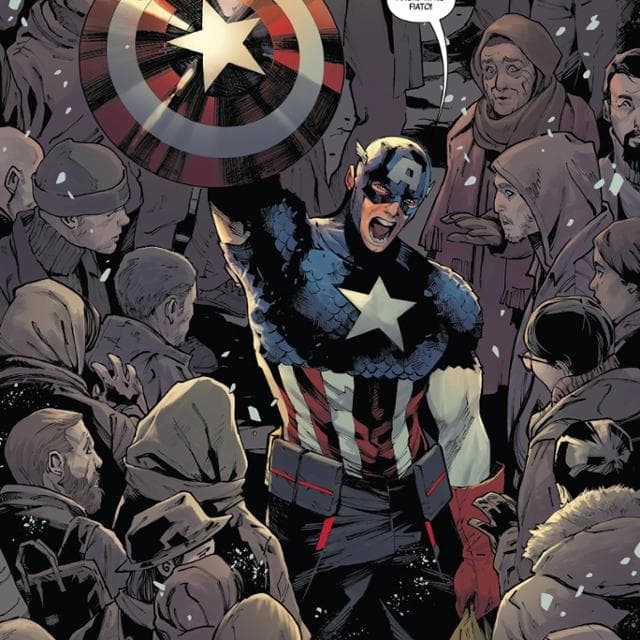
‘Cap is political by nature: he made his debut by striking Hitler before America entered the war. For me, he doesn’t represent the state, but the Bill of Rights. When certain fans say they don’t want politics in comics, what they really mean is that they don’t want progressive views.’
Your *Daredevil* broke with the dark tradition imposed by Miller, opting instead for a brighter tone. How did that shift come about?
Anyone who has imitated Frank Miller has, at best, produced a pale imitation. I told Marvel I wouldn’t write a cynical noir: I preferred an adventurous and spirited tone, tackling real-life dramas with a different spirit. Together with brilliant artists such as Paolo Rivera, Marcos Martín and Chris Samnee, we showed that Matt Murdock’s tragedies remained intact, but his reaction changed: facing them head-on rather than sinking into despair.”
Beneath the smile, however, one senses the weight of depression.
‘I’ve lived with depression my whole life and I’ve always seen that same struggle in Matt’s soul. Telling his story through that lens allowed me to write some very intimate and honest pages.’

There’s no shortage of memorable action sequences, such as the Mexican-style standoff against Bruiser.
‘It’s an overt tribute to Sergio Leone and Quentin Tarantino: I love it when comics absorb and reinvent the language of cinema.’
Is it true that you didn’t like the Fantastic Four at first?
‘My parents divorced when I was little; whilst on a trip, I looked for a comic to escape reality and found the Fantastic Four. In the finale, Sue Storm asked Reed Richards for a divorce: it was traumatic; I didn’t want to read them for years afterwards. When Tom Brevoort offered me the title, I focused on Mister Fantastic, a character rarely explored in depth. Together with my friend Mike Wieringo, we found the key, emphasising the warmth of family life.”
Who are your favourite characters and your mentors?
‘At Marvel, I’ve always loved Captain America and Daredevil because they took action without feeling sorry for themselves. My holy trinity of writers is from the early 1970s: Steve Englehart, Steve Gerber and Jim Starlin – the first to have a distinctive voice after Stan Lee. At DC, my guiding light is Superman: he embodies the best of humanity, kindness and brotherhood.’
Today you’re back as DC’s creative director: what are you working on?
“I’m writing *Justice League Unlimited*, the backbone of contemporary DC; I’m continuing *Batman/Superman: World’s Finest*, set in the past and free from editorial constraints; I’m working on *Batman and Robin: Year One* with Chris Samnee; and I’m writing *Action Comics* about Clark Kent’s origins as Superboy. It’s a huge and exciting workload.”
What do you think of new creators like Deniz Camp?
“Among the new talents, Deniz Camp is exceptional; his *20th Century Men* is brilliant. I still go to the comic shop every Wednesday and read as many comics as possible: you always have to study the competition to improve.”
How are American comics faring today?
‘The market is in excellent health: the success of the Absolute line denied those who predicted the end of the medium.’
And what about comic book adaptations?
‘Film involves hundreds of people, huge budgets and compromises: the vision is never that of a single creator. In comics, what I write is exactly what the reader finds on the page. They have an artisanal and direct spirit, close to the punk ethos: with a pen and a sheet of paper, you can create an entire universe.’
THE EVENT :Milan Games Week & Cartoomics takes place from 27 to 29 November at Fiera Milano Rho. You’ll be able to meet Mark Waid on the 28th at 2pm for the panel: From Flash to Kingdom Come: how do you create a legendary masterpiece? with Nicola Peruzzi from Panini. And on the 29th at 10am for the session Learning the Art of Storytelling. There will also be book signings every day at the Manicomix stand. Other guests include: John Romita Jr (Spider-Man) and Bill Morrison (The Simpsons and Futurama)
THE AUTHOR Mark Waid (Alabama, 1962) is one of the most important American comic book writers. After starting out as an editor, in the 1990s he created a landmark series that reimagined The Flash and the masterpiece Kingdom Come with Alex Ross. For Marvel, he has written memorable story arcs for Captain America, The Fantastic Four and an award-winning Daredevil; today he is the creative force behind DC Comics’ Justice League Unlimited and World’s Finest