
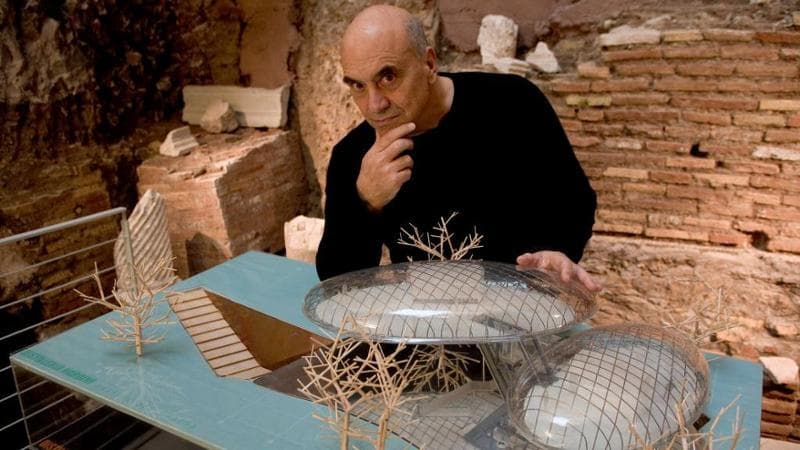
ROME — “Massimilià, what on earth are you going to do with three kilos of ginger? You’re not running a bar!”
Rome, Campo de’ Fiori market. The statue of Giordano Bruno stands as a warning: heresy may be a virtue, but those who practise it do not always come to a happy end.
The Massimiliano buying the ginger is architect Massimiliano Fuksas, who every day steps out of his studio in Piazza del Monte di Pietà and takes a stroll to greet his friends at the fruit and vegetable stall, or the florist with whom he gets into passionate discussions about AS Roma.
This is how our conversation ends with one of the Italian architects who did most to transform architecture in the second half of the 20th century, designing buildings around the world that have left a lasting mark on their urban surroundings.
Fuksas is now the subject of "Da tutta la vita”, a film directed by his daughter Elisa. Following its premiere at the Rome Film Festival, it will begin a tour on 3 December of cities where his practice has worked.
It is not a film about architecture — or at least not just architecture — but a journey through the life of a man, his complicated family history, his ideas and his hopes.
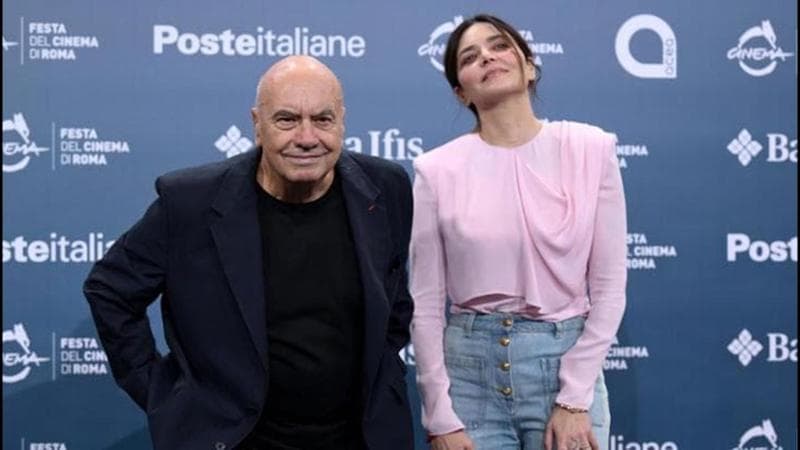
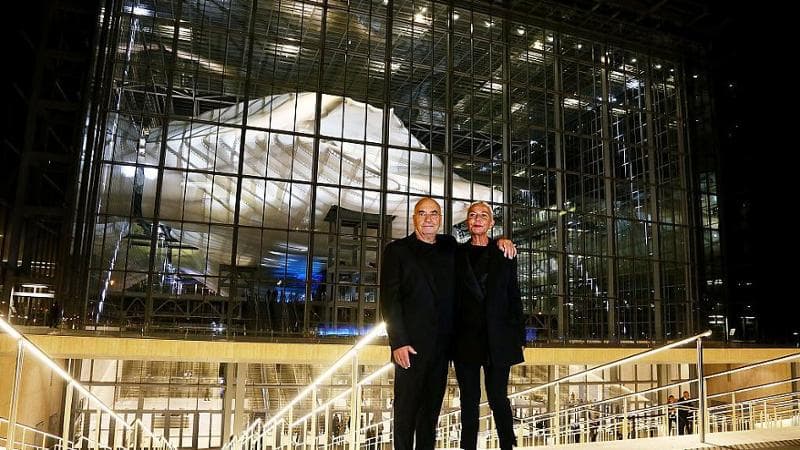
Elisa Fuksas has also recovered footage shot by herself and her sister Lavinia when they were children, as well as films made during the construction of his most celebrated buildings, beginning with Rome's convention centre, the Cloud, in the EUR district.
“My wife Doriana and I were living in Paris. In France, I had been awarded the Grand Prix National de l'Architecture Française, made a Commandeur of the Ordre des Arts et des Lettres, and had even received the Légion d'Honneur. But at a certain point I realised our work was becoming too ‘professional’. I couldn't even find time to paint any more. So I said to Doriana: ‘Take me back to Rome.’
“In the film I say: ‘The greatest stroke of luck in my life was my father's death when I was six.’ That may sound rather harsh, but it was that event that set my family and me on a nomadic path, allowing me to do everything I've done.
“At a certain point, though, I felt the need to belong somewhere, and that place was Rome. I wanted to build an important building that would bind me even more closely to the city. That is what the Cloud meant to me.”
The housing crisis, and the struggle to find an affordable home, has brought protesters onto the streets of European cities in recent months, from Madrid and Paris to Milan and Rome. We find ourselves discussing smashed shop windows, but is anyone actually looking for answers to the housing emergency?
“As early as April 2020, in the middle of the pandemic, a group of architects, doctors and researchers and I sent an open letter to President Mattarella, reflecting on the importance of the home as people's first place of defence and protection.
“We spoke about the need to launch a new national housing programme. The last one was Fanfani's, back in 1949. The president replied, but the government couldn't have cared less.”
What did you envisage for these new buildings?
“Something very different from the apartment blocks we're used to living in. An entire floor should be available to all residents, a shared space where older and younger people can meet and exchange experiences.
“And why not organise parties there? Parties for children, teenagers, older people, intergenerational gatherings. There should also be coworking spaces.
“Then, on the other floors, the homes themselves: flexible apartments that change as a family changes.
“I had already tackled this issue six years ago, but nobody paid the slightest attention. Nobody. Then the Bilbao city authorities called me to study the subject, and now Spain has commissioned us to carry out feasibility studies.
“From Italy, silence. I contacted the mayor of Rome, showed him the project, but nothing.
“It seems nobody is interested in what I do. As though I weren't part of this world, as though I were an outsider. Even when you say you don't want any money, you don't want anything at all, you just want to help.”
Perhaps that's because the great names of architecture have accustomed us to the idea that, when they design homes, they're luxury apartments for the super-rich. Milan is a case in point.
“That is the world of my sworn enemies. Today we need to think about flexible, inexpensive housing that everyone can afford.”
Would you be willing to design low-cost apartment buildings?
“I'm already doing it in Bilbao. That's the challenge today: proving that good architecture can be built on a low budget.
“The key word, I repeat, is flexibility. The industrialisation of construction — not prefabrication — can help us contain costs if it is applied using innovative methods.”
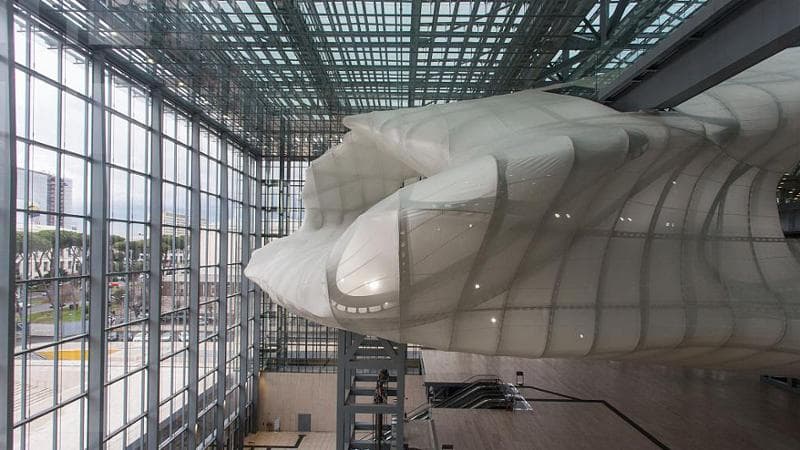
The Cloud in EUR was conceived to mark the end of your nomadic life. Would you like to establish a connection with a place not only through a building that has redefined an entire district’s identity, but also through homes for lower- and middle-income families? Would you like to make an appeal to the mayor?
“Gualtieri already knows, because I've told him. But it's worth trying again.
“Although in this city, what gets built, where and how, is decided less by the mayor than by the major landowners and property interests.
“Anyway, I'm here. I'm waiting for a call.”
More than artists, writers and certainly poets, architects have always had to maintain close relationships with those in power, even when that means autocrats and dictators. How do you navigate that?
“We deal with it all the time. Just think: the Russian airport at Gelendzhik, on the Black Sea, was inaugurated just days before Putin's invasion of Ukraine.
“We also witnessed political upheavals in Tbilisi, Georgia, and elsewhere in the world while our buildings were under construction.
“The Line project, the linear city in Saudi Arabia, is currently on hold following the bombing of Riyadh airport last October and because of the enormous uncertainty in the Middle East caused by the war in Iran.
“To answer your question: architecture is the art of peace, not the art of war.
“To put it even more clearly, it is an art devoted to designing places where people can live well, places where people meet rather than shoot at one another.”
Is it impossible to work exclusively in democratic countries?
“This is the world we live in, a world of incredible violence. Even Europe is becoming an authoritarian continent, partly because of the rise of the far right in country after country: Italy, Spain, Poland, Germany…”
So the aim is to build places of peace.
“Yes, to create places where people can talk and exchange ideas, in the hope of stopping the avalanche that's coming.
“Is China an authoritarian country? Of course. But if you think about it, it's a country that manages to produce, to build, to improve people's lives.
“What I'm saying is that it's extremely difficult to establish the boundaries of what is truly democratic.
“And it has always been that way. Was Pericles' Athens democratic? Out of a population of roughly 300,000, only a tenth had the right to vote. Women, resident foreigners and, of course, slaves were excluded.”
What worries you most at the moment?
“The enormous social injustice. The richest 10 per cent of the world's population owns roughly three-quarters of global wealth, while the poorest half — four billion people — holds barely two per cent.
“Banks lend only to people who already have money, so they can make more money. Everyone else gets nothing.
“Sooner or later, all this injustice will explode. You can't hold it back, you can't contain it.”
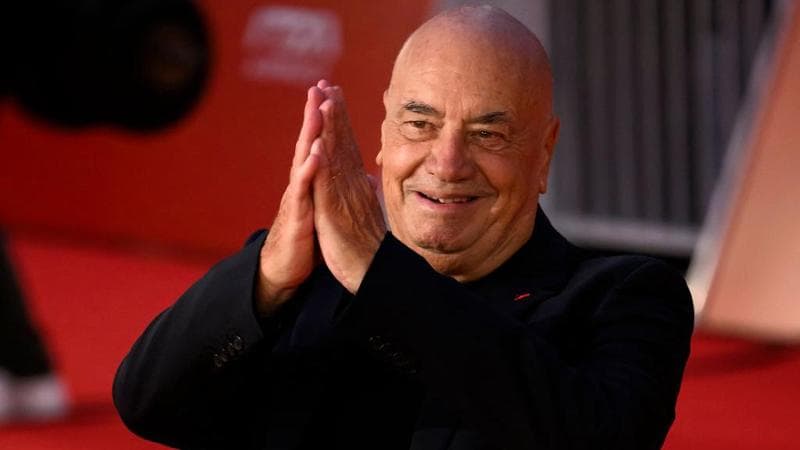
Is the poor boy Massimiliano Fuksas still angry with the rich?
“Not with the rich, but with the system of wealth, which is wrong.
“In my book ‘È stato un caso’, I recount a personal episode. At 17, I decided to live on my own. I was painting and had very little money.
“I found a small apartment for 10,000 lire a month. Between one thing and another, I managed to earn 70,000 lire. So my rent was one-seventh of my income.
“And today? It can easily exceed 100 per cent.
“Such an unjust system cannot work. People can no longer afford to buy a home, enjoy a degree of security, buy books or take their children to the cinema or a museum.
“A society cannot allow people to live so badly. Injustice cannot be the guiding principle of a society.”
Let's return to architecture. In the film, you tell your daughter Elisa that one of your guiding principles is to “forget”…
“Yes, to forget the next day what I did the day before, so that I don't keep designing the same building.
“I'm not just talking about form, but about the concepts that drive me and underpin my work. I always start again from scratch.”
And yet a building of yours is recognisable from a distance.
“But I do nothing to make my signature style recognisable.
“Everything I've done comes from reflecting on the place, on that particular moment, on who you are and who other people are.
“For me, geography is more important than history.
“One book that greatly influenced me was Bruce Chatwin's The Songlines, about the oral transmission of knowledge among Australian Aboriginal communities.”
One of your most recognisable features is the way you've broken open the conventional box-like structure of buildings. Your architecture goes beyond Euclidean geometry.
“I was comparing Cartesian architecture with fractals long before artificial intelligence came along.
“It all stems from my studies of quantum mechanics.”
We rarely hear you talk about sustainable architecture. Is it a subject that doesn't particularly excite you?
“What doesn't excite me is people who talk endlessly about it and cast themselves as heroes.
“Surely, when designing a new building today, any architect should take account of all the available technologies to reduce energy consumption, harness natural airflow to regulate temperature and minimise environmental impact, both now and in the future.
“You'll never hear me say, ‘Look how wonderful I am for having done this or that.’ It's the bare minimum.
“After all, my job is simply to make other people's lives better.”
In 2000, you chose “Less Aesthetics, More Ethics” as the theme of the Venice Architecture Biennale you curated. Is it still relevant today?
“Unfortunately, yes.
“I couldn't care less about aesthetics, but if we could inject a little more ethics into the world, we'd all be better off.
“On the giant screen that opened that Biennale, we showed videos of migrants crossing the Sahara, people fleeing wars and poverty, the absurd supermarkets of Western societies, overtourism.
“All phenomena that would become central in the years that followed. And not because I'm some kind of prophet…”
You've never been particularly interested in playing the aloof, contemplative starchitect, have you?
“Once, our friend Giorgio Armani asked Doriana and me: ‘Why don't you two act like big shots?’
“I replied: ‘I'm Roman, not Milanese.’
“Let me tell you something that really moved me.
“A few years ago, I was walking along Via dei Giubbonari when a rubbish collector pulled up alongside me in an AMA truck.
“He leaned out and said: ‘Archité, when are you going to finish that Cloud?’
“I replied: ‘It's finished. If you like, I'll buy you a coffee.’
“He stopped the truck in the middle of the street and we went to a café, where he ended up buying me the coffee.
“That gave me enormous satisfaction, because it meant the project had become something the whole city was part of, rather than a subject for debate among a handful of intellectuals.”
You mentioned Armani. You designed four commercial buildings for him, in New York, Hong Kong, Shanghai and Giza. What was your relationship like?
“He was very happy with those buildings.
“And he adored Doriana. Once, jokingly, he said he wished he could marry her himself.
“He was extremely intelligent. He always asked us not to spend too much money, but above all he loved beauty.
“And Doriana always managed to outsmart him. She would present two designs and say: ‘Choose the one you like best.’
“Without fail, he'd pick the one we preferred too. If you showed him something beautiful, that was what he wanted.”
In the film, you say: “I've spent my whole life being Fuksas.” What do you mean?
“It's a joke I've been making for years.
“When I get home in the evening, I say: ‘Well, I've spent another whole day being Fuksas.’
“But now I have to tell you a story from when I was a boy.”
Please do.
“After my father died, when I was six, my mother and I lived on very little money in a house on the Janiculum Hill.
“One day, when I was in my third year of primary school, I came out of school to find a huge black car with a chauffeur waiting for me.
“My mother was inside, and off we went.
“Our first stop was Rimini, where we stayed at the Grand Hotel. It was my first time in a hotel, and that's where I discovered what luxury was.
“My paternal grandmother's husband had decided to look after us by taking us to a castle the family owned in Austria.
“I lived there for two years, while my mother travelled back and forth to Rome.
“I was essentially alone all the time. My only companions were a cat and a dog.
“They wouldn't let me meet anyone, and I had very little contact even with my schoolmates.
“I'm telling you this because I'm used to solitude.
“I may seem loud and gregarious, everyone's best friend, but that's not really who I am.
“And the city helps me with that.
“In Rome, you can't put on airs. People here have seen emperors, popes and kings come and go. They've seen wars, defeats, disasters and rebirths.
“Monica Vitti used to tell a story about going to the Olympic Stadium with Gregory Peck.
“A fan in the stands started shouting: ‘Gregory! Gregory! Gregory!’
“Peck turned round, delighted.
“And the fan shouted: ‘You've made a fortune, haven't you!’
“How can you put on airs in a place like that?
“Now let's go for a walk to Campo de' Fiori and say hello to a few friends.”
This article was reviewed by an external translation partner