
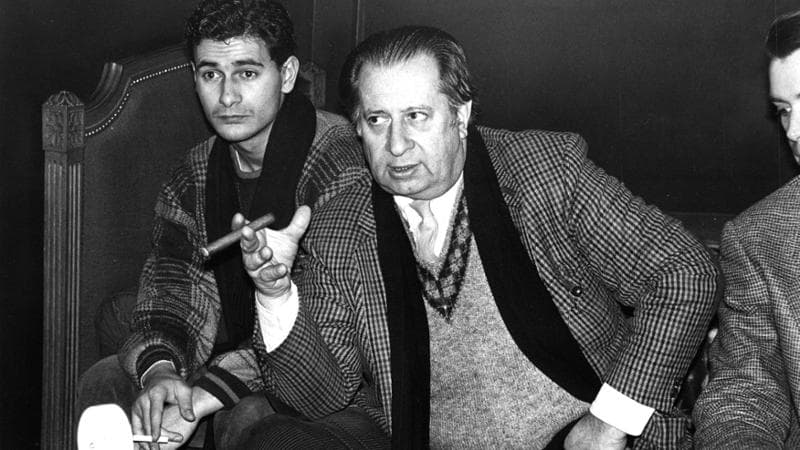
There were two Tinto Brasses, and one of them will never die. He will go down in film history as one of the most original experimental filmmakers in Italian and international cinema during the 1960s.
The other was the creator of hugely successful erotic spectacles, beginning with The Key. Their popularity is beyond dispute, but their artistic merits are very much open to question.
The great challenge for critics – and, one might even say, film historians – in the years ahead will be to bring these two figures together, to establish whether there was any continuity between them.
Can the fiercely intellectual collaborator of Roberto Rossellini be reconciled with the self-proclaimed “dirty old man” who went on to tarnish the legacies of Luchino Visconti and Rossellini himself with a film as spectacularly awful as Senso ’45?
It will not be easy, but trying might be fun.
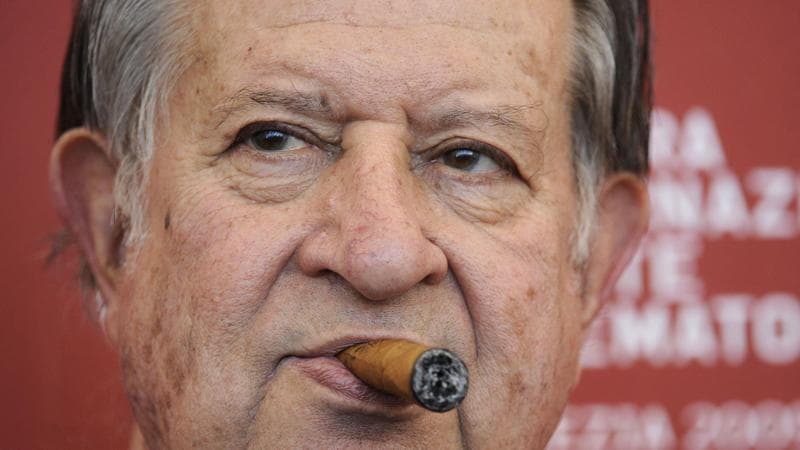
An extraordinary family and a creative partnership
Born in Milan and raised in Venice, Brass came from a family whose intellectual pedigree was perhaps second only to that of Visconti himself. His grandfather, Italico Brass, was an important painter, art collector and irredentist from Gorizia. His grandmother, Lina Rebecca, Italico’s wife, was an extremely wealthy Russian émigrée. His father, Alessandro, was one of Venice’s leading criminal lawyers.
Nor should we overlook the family background of Brass’s wife, Carla Cipriani, affectionately known to everyone as “Tinta”, who died in 2006. She was the daughter of Giuseppe Cipriani – yes, that Cipriani, the founder of Harry’s Bar and one of the wealthiest men in Venice.
Carla was far more than a wife. She made an extraordinary contribution to her husband’s films as a screenwriter, script supervisor and producer, and shared his fascination with eroticism, which would become a defining feature of their cinema from the 1980s onwards.
The experimental genius of the 1960s
We can offer firsthand testimony about the kind of filmmaker Brass was before he became famous with The Key.
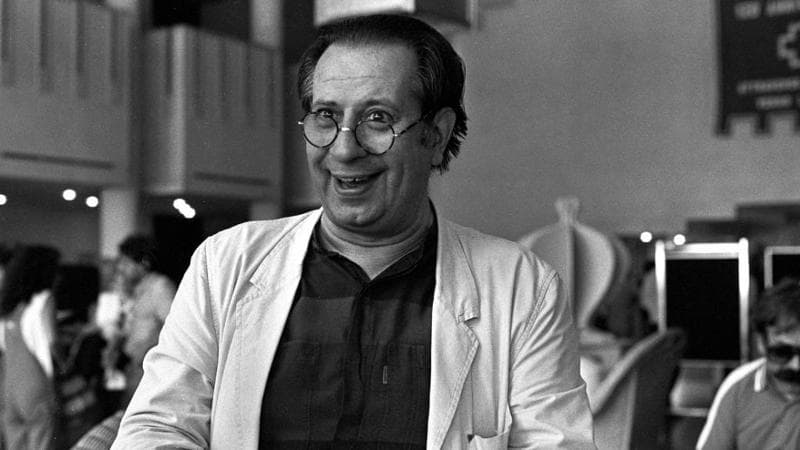
We once interviewed the great Italian actor Gigi Proietti about his brief but intense collaboration with Robert Altman. We asked whether any other directors in his career had given him the same creative freedom.
His answer was unequivocal: “Brass, and after him Sergio Citti. They were both experimenters, in completely different ways. With Brass, we did some extraordinarily strange things that seemed to have come from the Moon, at least in Italy. Working with him was tremendous fun.”
Proietti was referring to The Howl (L’urlo) and Dropout, two films from the second half of the 1960s that rank among the most eccentric creations of Italian cinema at the time. Both ran into trouble with the censors.
But Brass had made his debut in 1963 with Chi lavora è perduto (Who works is lost), shot in Venice. It was pure French New Wave, as though the stylistic and political revolutionary spirit of Godard and his contemporaries had been transported to the Venetian lagoon.
Indeed, all Brass’s films from that decade were strikingly original. Yankee was Italian cinema’s most pop-infused, psychedelic western. Il disco volante (The flying saucer) was one of the strangest films in Alberto Sordi’s career. Nerosubianco – written as a single word – was shot in London and already represented a daring exploration of female sexuality.
And we should not forget that, a few years earlier, Brass had worked as Rossellini’s assistant on General Della Rovere and edited India, widely regarded as one of the greatest ethnographic documentaries ever made.
Caligula, a film with a troubled history
And then there is Caligula. A story within a story, and one of the most troubled films ever made.
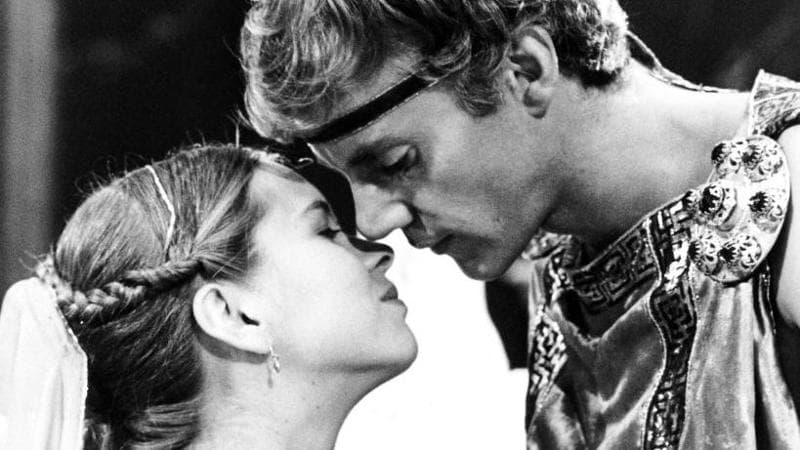
I saw it in London, at a cinema near Piccadilly Circus that screened it on a continuous loop, rather as The Rocky Horror Picture Show was shown at the Mexico cinema in Milan. In Italy, it was banned.
I will never forget that the opening credits contained no conventional “directed by” attribution. Instead, they read “Photography by Tinto Brass”, followed by “Additional photography by Bob Guccione”.
Guccione, the publisher of Penthouse magazine and the film’s producer, had inserted explicit sex scenes featuring none of the principal actors. The result was, in every sense, a pornographic film.
But the material that was not pornography was remarkable.
Working from a screenplay by Gore Vidal, Brass had created a parable of power as sadism, madness and manipulation. Historical accuracy was out of question, of course. What emerged was a surreal vision of the Roman Empire, dazzling in its production design, courtesy of Danilo Donati, Fellini’s brilliant production designer.
The cast was extraordinary: Malcolm McDowell, Helen Mirren, John Gielgud, Peter O’Toole and several talented Italian actors, including Adriana Asti, Leopoldo Trieste and Paolo Bonacelli.
The film survives in a bewildering array of versions, making its textual history exceptionally difficult to untangle. But it certainly deserves another chance.
The Key and the triumph of erotic cinema
Then came the success of The Key, starring Stefania Sandrelli. Its notoriety owed something to Gian Luigi Rondi’s refusal to include it in the Venice Film Festival, a decision that inadvertently handed Brass an unexpected burst of publicity.
We saw it at the San Sebastián Film Festival, and it was a strange experience. The brilliant director of the 1960s seemed to have settled into a formulaic kind of eroticism, elegantly packaged but rather lifeless.
Things would only get worse.
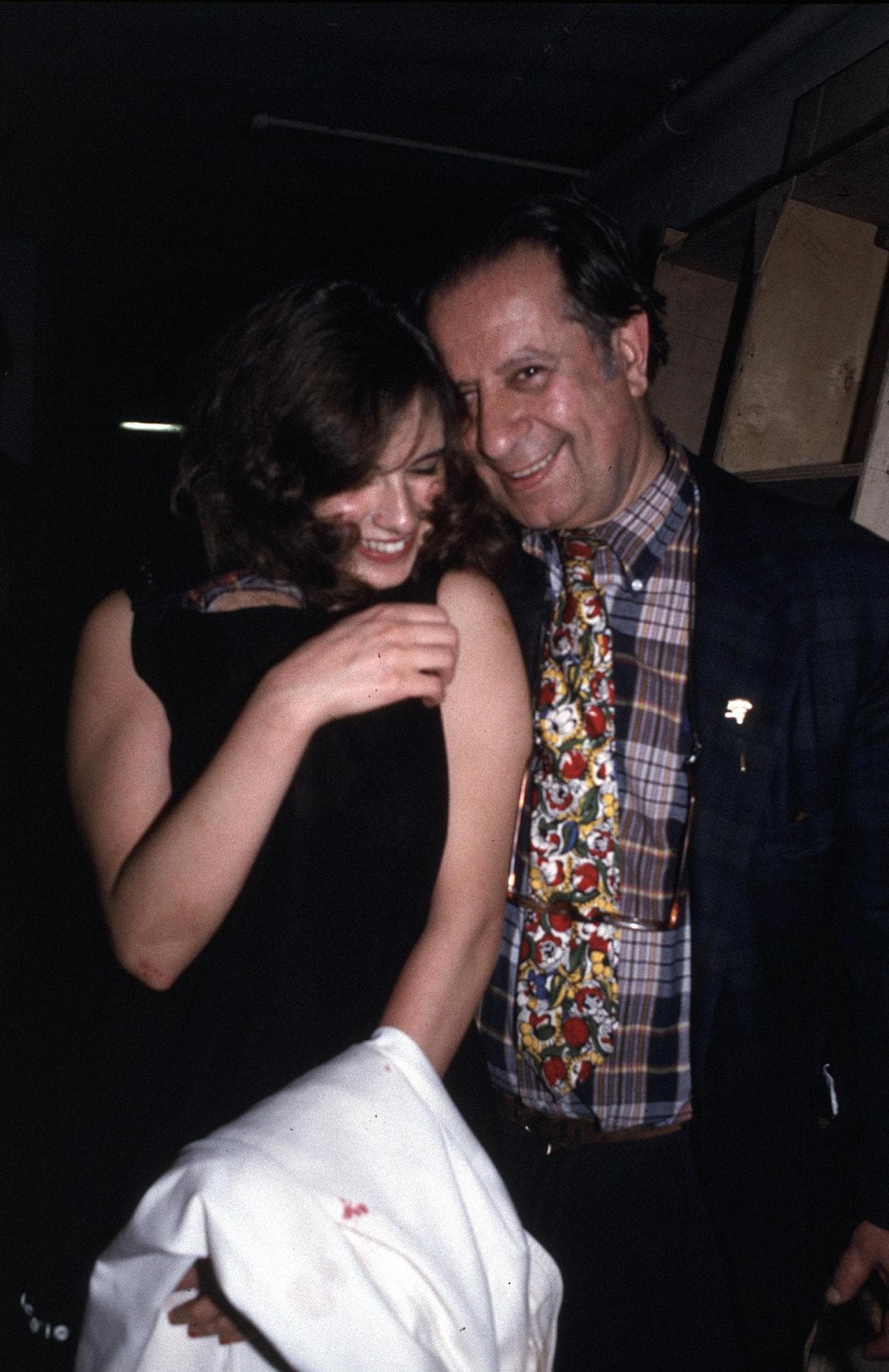
Films such as Miranda, Capriccio, Snack Bar Budapest and Paprika simply repeated the formula. They featured undeniably sexy actresses – Serena Grandi, Claudia Koll, Francesca Dellera and Debora Caprioglio – but none possessed the talent or versatility of the great Sandrelli.
Yet, to repeat the point, this was the second Tinto Brass: a filmmaker who enjoyed sex but, above all, laughed all the way to the bank.
He cared little about the critics. So little, in fact, that in Miranda, during a scene set in a cemetery, he placed the names of Tullio Kezich and Callisto Cosulich on two gravestones. Both were from Trieste, and both ranked among Italy’s most important film critics at the time.
It was a harmless joke. As far as we know, they both had a good laugh about it – though perhaps they also crossed their fingers to ward off bad luck.
This article was reviewed by an external translation partner