
This article was first published in la Repubblica on 22 May 2020, just after Italy emerged from its Covid-19 lockdown.
What language – or rather, what languages – does a city speak through its architecture, its history and its spaces?
The question occurred to me as I watched how Rome responded to the pandemic.
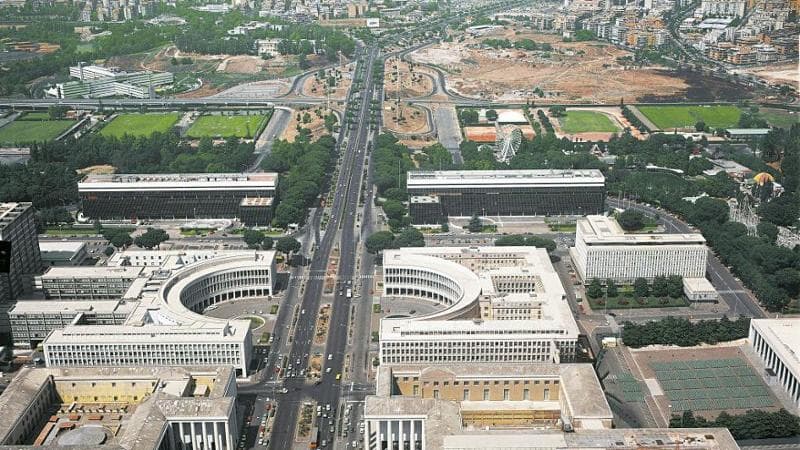
Take EUR, for example. How different it is from the city's outskirts, its historic centre or certain neighbourhoods built during the reign of King Umberto I!
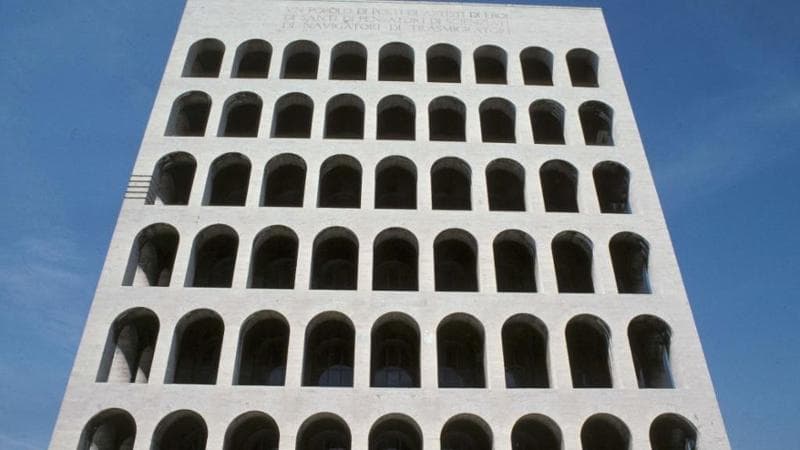
As we know, the district was conceived for an event that never took place: the 1942 Rome Universal Exposition, from which its name, EUR (Esposizione Universale Roma), is derived.
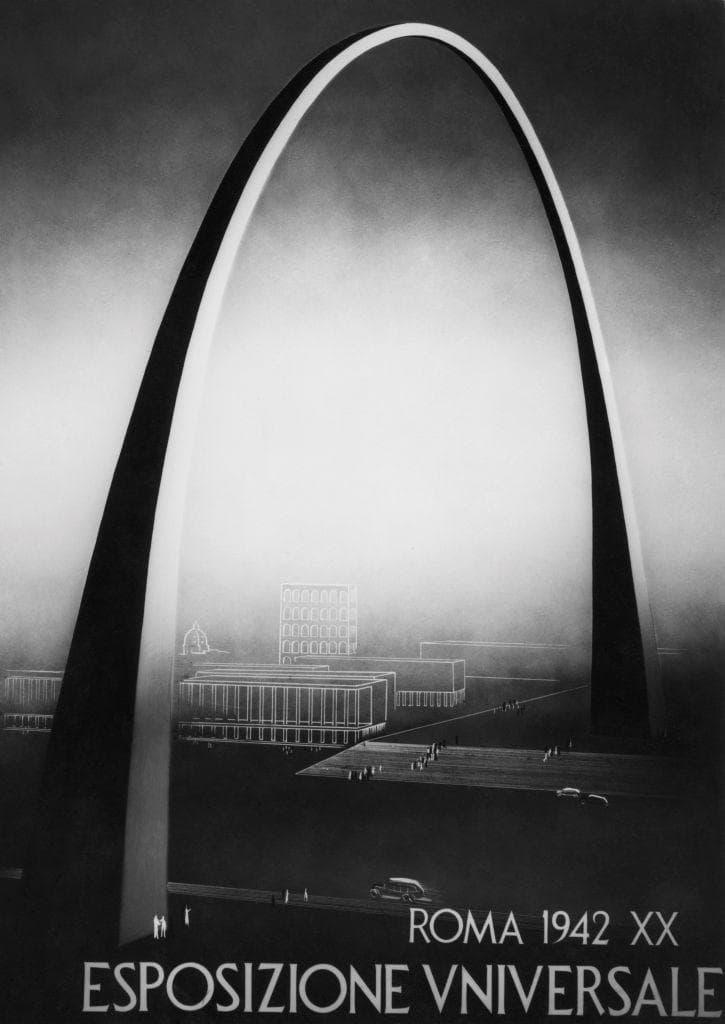
But the entire event was cancelled because of the war. From the very beginning, then, EUR's destiny seems to have been marked by a missed appointment with history.
The ghost of an empire
To be clear, that failure produced an admirable result, one that, more than half a century later, remains among the most successful examples of Fascist housing policy – a triumphant version of Mussolini's more modest, yet exceptionally elegant, Quarticciolo development.
Nevertheless, EUR's very structure continues to embody the idea of an empire promised but never delivered, proclaimed and then vanished: a dream, a phantom limb, the remains of a future that never came to pass and was instead tragically cut short by defeat.
Of course, this unsettling effect owes much to the mysterious metaphysical architecture that seems to have emerged from the paintings of Giorgio de Chirico, an architecture that characterises so many of the new towns built in the Lazio region, most notably Sabaudia.
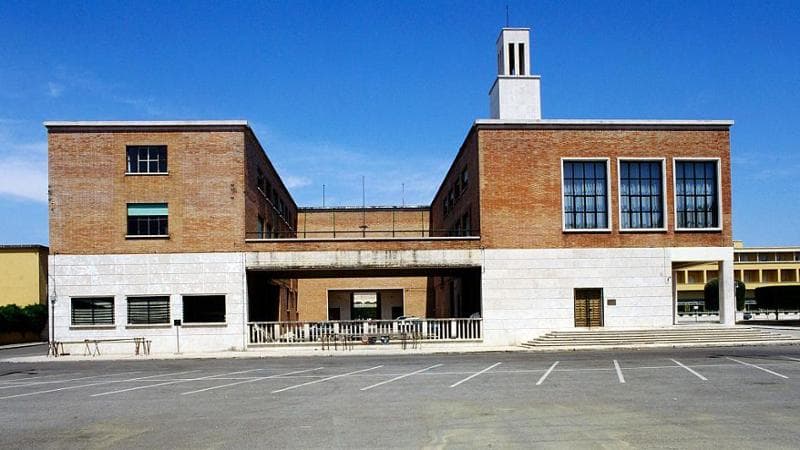
In the works of the pictor optimus, the defining feature is the emptiness of the streets and squares.
When lockdown brought de Chirico's paintings to life
This, then, explains why the pandemic seems, paradoxically, to have fulfilled a desire embedded in the district from its very origins: an EUR without inhabitants, or at least without passers-by, restored to the absolute silence of oil paintings – a silence that long predates our quarantine.
Now that we are in phase two of the easing of lockdown restrictions, the situation has changed considerably.
Yet along the streets, enormous compared with those elsewhere in the capital, only a few scattered figures can still be seen, and they are wearing face masks.
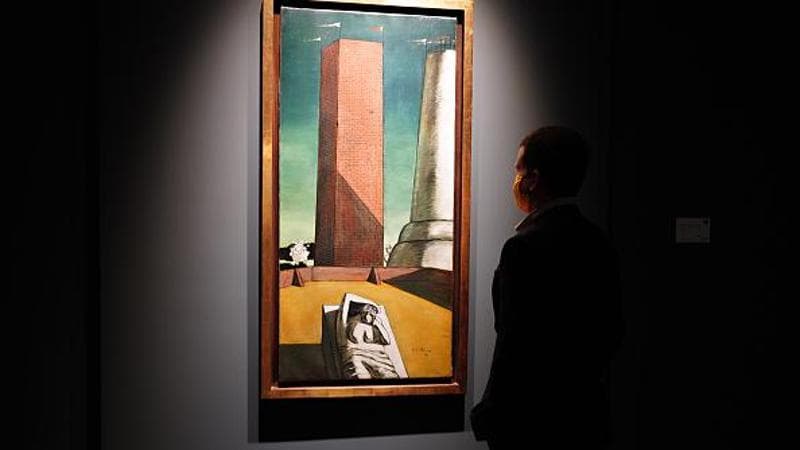
We are witnessing a masked humanity taking possession of a metaphysical world.
De Chirico would have appreciated that detail, so reminiscent of his mannequins.
The same might be said of Michelangelo Antonioni, who chose EUR as a location for his 1962 film L'Eclisse (The Eclipse).
Antonioni and the return of alienation
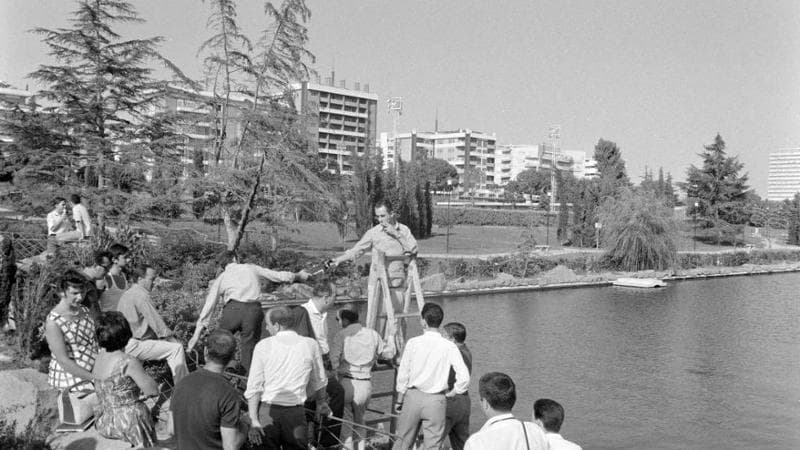
The final instalment of his "existential trilogy", also known as the "alienation trilogy", following L'Avventura (1960) and La Notte (1961), the film explores a feeling that has made a strange comeback in recent months: alienation.
Its powerful reappearance, however, has not occurred at the subjective level, as a form of individual neurosis, but on a social, collective scale. Who would ever have imagined it?
And so the model district envisioned by Fascism has come to embody, more than anywhere else, the stage on which our collective disorientation plays out.
Or, to borrow from Shakespeare, "the winter [of 2020] of our discontent".
This article was reviewed by an external translation partner