
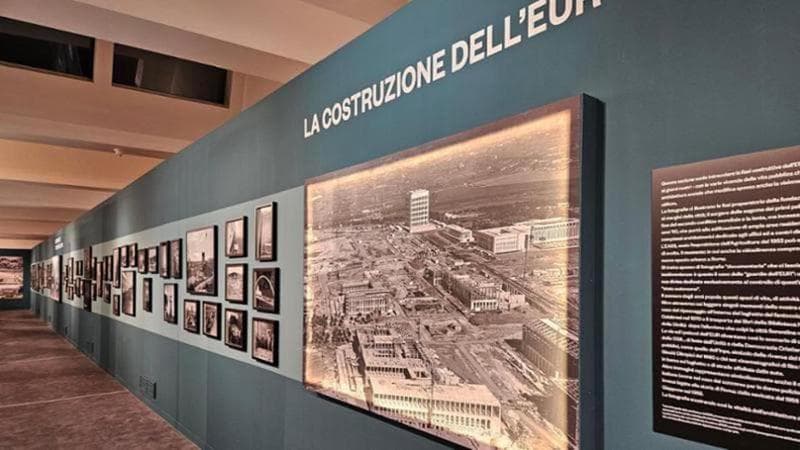
An exhibition tracing the history of Rome's EUR district is set to become a permanent museum dedicated to telling the story of the architectural evolution of the capital's most modern neighbourhood.
The exhibition brings together drawings, archival material, photographs and sketches of the district's most iconic monuments and buildings, from images of the Square Colosseum under construction to a large wooden model of architect Massimiliano Fuksas's Cloud convention centre.
For lovers of Rome's rationalist architecture, architecture students and anyone interested in the city's history, EUR – A 90-Year History is an exhibition not to be missed.
It is open in the former draughtsmen's hall of the Palazzo Uffici, the headquarters of EUR SpA, until 7 February 2027.
From Mussolini's grand vision to the Square Colosseum
Organised by EUR SpA to celebrate the district's 90th anniversary, the exhibition opens with a wooden model and images of EUR's pentagonal layout, as originally conceived by architects during the Fascist era, under the artistic and urban planning direction of Marcello Piacentini.
They included Adalberto Libera, Giovanni Guerrini, Ernesto La Padula and Mario Romano. The latter three designed the Palazzo della Civiltà Italiana, better known as the Square Colosseum.
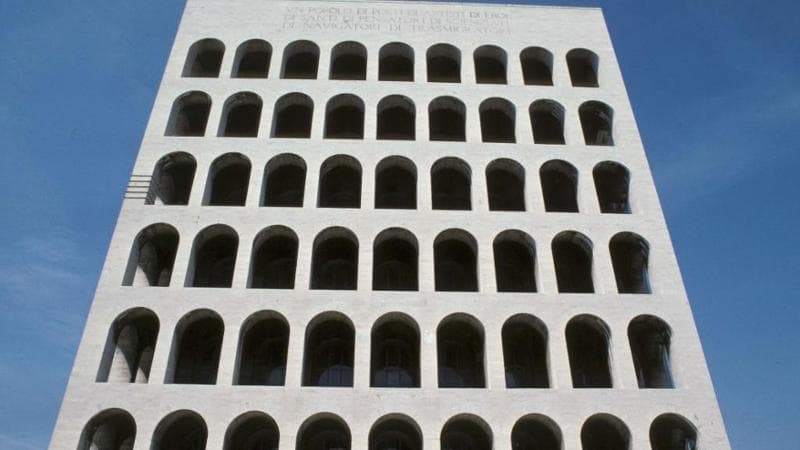
Across the exhibition's three sections, visitors can see photographs of the Square Colosseum and the Basilica of Saints Peter and Paul under construction.
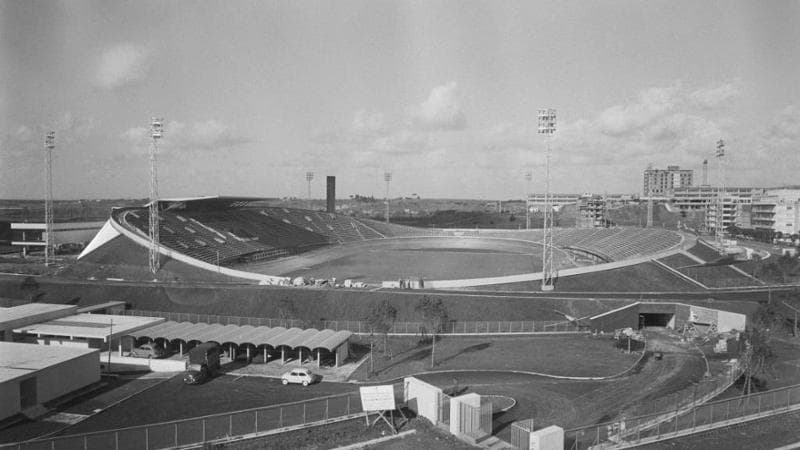
There are also plans for projects that were never built, including Libera's gigantic arch, alongside documentation of structures that no longer exist, such as the Velodrome designed for the 1960 Rome Olympics.
The Cloud, cinema and a vanished Velodrome
Other highlights include an enormous wooden model of Fuksas's Cloud, original architectural plans from the 1940s and numerous posters for films shot in the district, from Federico Fellini's Boccaccio '70 to Gabriele Muccino's The Last Kiss.
Two enormous busts of Benito Mussolini and King Victor Emmanuel III also stand out among the exhibits.
A silent documentary features footage of construction sites, including that of Cesare Ligini's Velodrome, demolished in 2008 after falling into disrepair and because of the presence of asbestos.
There is also an interview with Federico Fellini, who describes EUR as "a modern district, but at the same time a familiar one, and therefore less frightening".
A permanent museum for Rome's architectural history
"This part of the city was created to speak to the world," explains Enrico Gasbarra, president of EUR SpA.
"So we decided to mark its 90th anniversary with an exhibition featuring previously unseen material and looking towards the future, because EUR is a place that embraces its history while also looking ahead."
But the ambition goes beyond a temporary exhibition.
"The project has an ambitious goal: to become a permanent museum, with expanded digital features and a permanent exhibition layout," Gasbarra says.
"A museum dedicated to EUR's history that could be called EUR: History Looking Towards the Future."
Visitor information
Palazzo Uffici, EUR SpA, Largo Adenauer, Rome.
Open Tuesday to Thursday, 10am–1pm; Friday to Sunday, 10am–5pm. Closed Mondays.
Admission is free. The exhibition runs until 7 February 2027.
This article was reviewed by an external translation partner